

FORGED BY FIRE | The Life, Survival, and Reinventions of Dr. Günter Gerhard Klotz Matschuck

Born in the ruins of a collapsing Europe and shaped by war, displacement, engineering, migration, reinvention, and survival, Dr. Günter Matschuck’s life journey spans some of the most transformative decades of the modern world. From surviving the bombings of Cologne during the Second World War to becoming an internationally respected engineer, industrialist, renewable energy advocate, institution builder, and civic leader in the Philippines, his story is not defined by comfort or stability, but by repeated reconstruction.
Again and again, life dismantled the world around him. Sometimes through war. Sometimes through grief. Sometimes through migration, loss, or physical catastrophe. Yet each stage demanded the same decision: whether to retreat into despair or begin again.
Again and again, he rebuilt.
Few experiences embodied this pattern more profoundly than the accident of May 14, 1986 — an ordinary Sunday afternoon in Makati that nearly ended his life, yet ultimately transformed the course of it forever.
What followed became not merely a story of survival, but of rebirth.
May 14, 1986.
The mangoes hung high above the garden wall, heavy and golden beneath the afternoon sun. It was supposed to be an ordinary Sunday.

Inside the house in Dasmariñas Village, preparations were underway for dinner with friends. Günter Matschuck had guests arriving later that afternoon — Dr. Cris Garcia and his wife Becky, part of the close circle of companions who had become his second family in Manila.
Before they arrived, he decided to harvest mangoes from the large tree inside the property.
Europe was still unsettled by the lingering fears following the Chernobyl disaster, and with an upcoming trip to Salzburg approaching, bringing fruit from home felt practical, almost comforting.
Using a lightweight aluminum skimmer pole normally intended for cleaning the swimming pool, Günter climbed high into the tree, maneuvering carefully between the branches in search of the ripest clusters. Then everything changed. Hidden beyond the upper canopy, invisible from where he stood, was a high-voltage transmission line.
The moment the aluminum pole touched the wire, the current surged violently through his body.
The shock locked his muscles instantly.
There was no time to react.

No time to let go.
Later, he would remember flashes of color and the strange sensation that time itself had fractured. In those suspended seconds between consciousness and oblivion, an unexpected realization surfaced with absolute clarity: he did not want to die.
Not yet.
The force of the blast hurled him downward.
When Joanne reached him moments later, smoke still rose faintly from his burned body.
“I am alive,” he reportedly managed to whisper. “Makati Medical… please inform Dr. Varwig.”
The injuries were catastrophic.

Doctors would later struggle to explain how he survived.
But survival, as Günter Matschuck would discover repeatedly throughout his life, has a way of demanding reinvention.
And this would not be the first time life forced him to begin again.
Born Into the Collapse of an Era
Günter entered the world on February 26, 1939, in Cologne, Germany, only months before Europe descended into the Second World War. The timing of his birth would shape the emotional architecture of his entire life.
Children raised in stable societies inherit continuity almost unconsciously — functioning institutions, predictable routines, secure homes, and the quiet assumption that the world around them will endure. But Günter belonged to another generation altogether.
He belonged to the generation born directly into collapse.

Before he could form conscious memories, the foundations of European civilization around him were already cracking beneath ideology, militarism, and total war. The Germany of his childhood projected discipline and certainty outwardly, yet beneath the spectacle of banners and patriotic rhetoric, the country was moving toward devastation.
For adults, politics defined the era. For children, history arrived differently.
It entered through atmosphere.
Through whispered conversations at home. Through tension and fear. Through ration cards, blackout curtains, distant explosions, and eventually, fire.
The Matschuck family itself reflected the complexity of old Europe.
His father’s lineage traced back to East Prussia near the Lithuanian border, descendants of disciplined Prussian “Soldatenbauern,” or soldier-farmers, shaped by military culture, agricultural resilience, and practical survival. His grandfather Hermann Matschuck later became a master craftsman for the Royal Prussian Railways, specializing in precision woodwork for luxury train interiors, part of the skilled industrial class that fueled Germany’s rise in the late nineteenth century.
His father Erich represented a newer Germany altogether — one driven by machines and modernization. As part of the pioneering generation of automobile mechanics during the 1920s and 1930s, he belonged to a profession that carried both prestige and technical importance at a time when automobiles remained rare and mechanically demanding. His expertise allowed him to work for wealthy businessmen and travel across Europe long before international travel became commonplace.

From him, Günter inherited discipline, mechanical curiosity, practical intelligence, and emotional restraint.
But his mother, Elisabeth “Liesel” Klotz, brought another dimension entirely. Coming from southwestern Germany near the Rhine, she embodied the warmth, humor, openness, and sociability associated with Rhineland culture. Together, his parents represented two enduring strands of German identity — precision and warmth, discipline and humanity, technical rigor and emotional adaptability.
Those dual influences would remain visible in Günter throughout his life. Then war accelerated everything.
By the end of 1940, Erich was drafted into military service. For millions of European children, war first revealed itself through absence. Fathers disappeared into uniforms, train stations, military convoys, and silence.
Young Günter was too small to understand geopolitics, but he understood worry. He understood the emotional weight carried inside homes where women suddenly had to survive without certainty.
Soon Cologne itself became a target.
As one of Germany’s major industrial and transportation centers, the city endured increasingly devastating Allied bombing campaigns. Entire districts vanished beneath firestorms and collapsing masonry. For children, bombings created strange psychological contradictions where ordinary life and terror existed side by side. One moment families sat quietly at dinner. The next, sirens erupted and entire populations rushed underground into shelters.

Children learned sounds instinctively: aircraft engines, anti-aircraft fire, the descending whistle of bombs, the trembling earth after impact.
Before adolescence, Günter already understood that buildings could disappear overnight, systems could collapse, and adults did not always control events.
Yet another lesson formed alongside the fear: Human beings could survive extraordinary destruction.
That belief would shape everything he later became.
Childhood Beneath Bombs and Ashes
One of the defining emotional experiences of Günter’s childhood began with a telegram.
In wartime Europe, telegrams rarely brought good news. Families associated them instinctively with death, injury, or disappearance. Every knock at the door carried anxiety.

When word arrived that Erich had been critically hospitalized with typhus near the Eastern Front, Günter’s mother refused to wait helplessly. Instead, she undertook the dangerous journey across collapsing Germany with her young son.
The trip became one of the most traumatic memories of his life.
Railway stations overflowed with refugees, wounded soldiers, exhausted mothers, and frightened children as transportation systems struggled beneath the pressures of war and constant Allied bombing.
During the chaos of boarding one overcrowded train, four-year-old Günter slipped and fell into the gap between the train and the platform.
For one terrifying moment, he lay on the tracks beneath massive steel wheels.
Darkness. Grease. Metal. The terrifying nearness of death.
Then anonymous hands reached down and pulled him back to safety.

He would never know who saved him, but the moment taught him something profound long before he could articulate it: life could disappear instantly, and survival often depended on the kindness of strangers.
When mother and son finally reached the hospital, they found Erich emaciated and barely alive. The strong mechanic who once moved confidently through Europe now lay physically broken.
For a child, seeing a parent weakened shattered the illusion of certainty that adults are supposed to embody.
Soon afterward, they returned to Cologne only to discover their apartment destroyed by bombing.
Everything had vanished: furniture, clothing, photographs, the fragile structure of ordinary life itself.
As British bombing intensified, Cologne descended further into ruin. Streets burned. Entire neighborhoods disappeared beneath smoke and collapsing masonry. Young Günter remembered melted asphalt and smoke hanging endlessly above the city.
Eventually, authorities evacuated mothers and children from heavily bombed areas. Günter and his mother were sent to the Black Forest region of southern Germany.

The relocation brought safety from bombs, but not comfort. They lived under harsh conditions among families who resented being forced to host evacuees. Food remained scarce. Winters were severe. Fear and exhaustion shaped daily life.
Then another tragedy arrived.
His baby brother Werner was born prematurely and weak during the final years of the war. Three days later, he died.
The image of the tiny white coffin and his mother’s grief remained permanently etched in Günter’s memory. Like many wartime children, he learned about death long before he fully understood life.
Yet amid hardship, moments of humanity still appeared unexpectedly.
One day after the war, while traveling through the forest, Günter encountered a Black French soldier for the first time in his life. Frightened at first, the boy froze.
Then the soldier smiled warmly and handed him a chocolate bar.
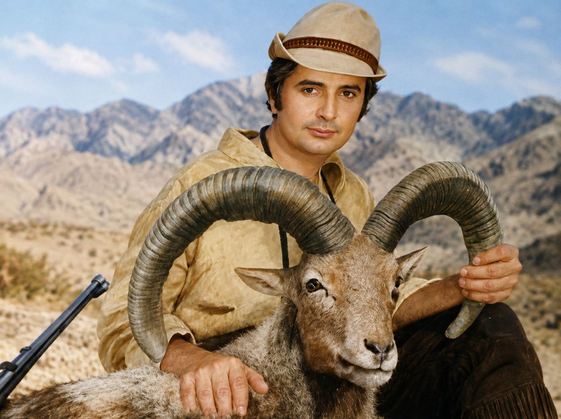
The gesture became unforgettable because it contradicted the fear and propaganda that had dominated wartime Europe. It taught him something simple but enduring: Human kindness survives even after civilizations fail.
When Germany finally surrendered in 1945, the war officially ended. But for millions of German families, survival remained uncertain. The country lay shattered physically, politically, and morally.
For the six-year-old boy emerging from bombings, evacuation, hunger, and grief, childhood itself had already become inseparable from reconstruction.
The Farm That Saved His Soul
Relief finally arrived through his maternal grandparents’ farm in Ichenheim near the Rhine meadows of Baden.
After years of bombings, evacuation, hunger, and emotional exhaustion, the farm became the place where life felt human again.
Like countless families in postwar Germany, the Matschucks arrived through landscapes crowded with refugees, discharged soldiers, widows, and displaced civilians carrying whatever remained of their former lives. People were no longer searching for prosperity, only stability.

For young Günter, the contrast felt overwhelming.
Unlike the devastated cities where destruction and starvation lingered, the countryside still produced food. The land continued functioning even after civilization itself seemed to collapse.
There was fresh bread. Milk. Fruit. Animals.
Fields stretching toward open sky. Most importantly, there was rhythm again.
Life on the farm restored continuity. Sunrise and sunset mattered. Planting and harvest followed natural cycles. Family members worked together toward visible, necessary goals.
The boy who had wandered through ruins now wandered forests and fields.
Farm life demanded hard labor. Günter carried hay, worked in tobacco fields, gathered firewood, planted crops, and helped during harvests. Yet the labor never felt meaningless. The farm taught him systems thinking long before he ever studied engineering.

Everything connected.
Weather affected crops.
Crops affected survival. Tools required maintenance.
Animals depended on discipline and timing.
Nothing could be wasted.
In postwar rural Germany, scarcity sharpened awareness. Food did not appear magically. Warmth did not emerge effortlessly from invisible systems. Survival required coordination, discipline, and practical intelligence.
Young Günter watched adults repair broken tools instead of replacing them.

He learned that competence carried moral value.
His grandfather influenced him deeply. The older man understood weather, crops, construction, and seasonal rhythms instinctively. To the child, that practical mastery felt almost magical.
The farm also restored emotional warmth after years dominated by fear. Meals mattered again. Conversation returned. Children laughed. Ordinary family life slowly reassembled itself.
For a boy shaped by wartime instability, the farm offered more than nourishment. It gave him emotional grounding and, perhaps for the first time, freedom. He explored forests, riverbanks, fields, and barns with endless curiosity while nature itself became teacher.
Years later, despite his international achievements, Günter still spoke of those years in Baden with deep tenderness. He understood that the farm had done more than shelter his family.
It had rebuilt him.
The values formed there never disappeared: respect for labor, discipline, resourcefulness, practical intelligence, and deep respect for systems and nature. Those traits would later shape the engineer, entrepreneur, and community leader he became.

By 1950, however, something had already begun to separate Günter from the expectations surrounding him.
Most members of the family before him had received only elementary education. In postwar Germany, especially among working-class households struggling simply to rebuild daily life, higher education often felt distant and impractical.
But the boy who had already survived war and displacement sensed instinctively that education represented more than schooling. It represented possibility.
Convincing his parents to allow him to pursue secondary education became one of the first truly consequential decisions of his life.
A Boy Fascinated by Machines
Even as a child, Günter Matschuck possessed an unusual fascination with how things worked.
Machines were never merely tools to him. They represented logic, structure, movement, and possibility.

Part of that fascination came from his father, whose work as a mechanic exposed him early to engines, automobiles, and technical problem-solving. In postwar Germany, technology also symbolized reconstruction itself. Cities lay in ruins, yet cranes still rose above shattered streets, railways reopened, and factories slowly awakened.
For a child emerging from devastation, machinery carried almost mythic power. It suggested that broken worlds could be rebuilt.
That fascination deepened in 1948 when he received a second-hand TRIX metal construction set. For the young boy, it became an entire universe. He spent endless hours assembling cranes, bridges, vehicles, and mechanical systems from metal parts, gears, and screws. Because the set was incomplete, he constantly improvised solutions.
Without realizing it, he had already begun thinking like an engineer.
Every failed structure taught him something: weight distribution mattered, alignment mattered, balance mattered.
A single loose screw could compromise an entire design.
Soon another gift captivated him even more — a small toy steam engine powered by fuel tablets. The machine mesmerized him. Water heated, pressure built, and motion emerged. For the first time, he witnessed invisible energy transforming into mechanical power.

That childhood wonder eventually evolved into a lifelong fascination with thermodynamics and energy systems.
Yet what truly distinguished him was not mere curiosity, but persistence. He dismantled radios, tools, and household devices simply to understand their hidden logic. His mother occasionally worried about the endless disassembly of perfectly functional objects around the house, but the impulse already revealed the future engineer.
He wanted not merely to use systems, but to understand them from the inside.
That mindset later shaped his entire worldview. Whether dealing with engines, organizations, or communities, Günter instinctively searched for underlying systems:
What made things function? Why did they fail? How could they improve?
The boy fascinated by machines would eventually spend his life building systems across continents.
The Apprenticeship of Hardship

After secondary school, Günter entered an apprenticeship at Klöckner Humboldt Deutz AG, one of Germany’s major industrial engine manufacturers.
The experience hardened him.
Factory life demanded discipline, endurance, and precision. He woke before dawn and spent long days surrounded by heat, machinery, noise, and relentless industrial routine.
Postwar Germany during the 1950s remained psychologically marked by collapse but economically driven by reconstruction. Factories became symbols of national recovery. Engines, steel, machines, and infrastructure powered the country’s “economic miracle,” and industrial labor carried deep respect because rebuilding depended upon it.
Young Günter entered this world just as Germany itself was reinventing its future.
Yet the apprenticeship awakened something beyond technical skill. He respected labor deeply, but feared becoming trapped in a life without intellectual growth.
So, after exhausting factory shifts, he attended evening classes.

By day he wore blue overalls. By night he studied languages, mathematics, and advanced subjects. Sleep became secondary.
For many young workers, factory life offered stability. For Günter, however, machinery sparked intellectual hunger rather than complacency. He became fascinated not only by how engines functioned, but why.
What governed efficiency? How did combustion generate motion? Why did machines behave differently under varying conditions?
The apprenticeship exposed him to industrial systems, but also to the limits of repetitive labor. He saw highly capable men remain economically trapped despite extraordinary practical skills. That reality intensified his determination to continue studying.
At the same time, the factory gave him something many academics never acquire: practical understanding. He learned how tools felt in the hand, how machinery failed under real conditions, and why technicians and mechanics deserved respect.
Those experiences later distinguished him sharply from purely theoretical engineers.
Alongside a friend, he also launched a small Vespa repair business after work, restoring damaged scooters and reselling them for profit. The venture taught him entrepreneurship, customer relations, and the economic value of technical competence. More importantly, it reinforced a lesson that stayed with him for life:

Skill creates freedom.
The apprenticeship years also forged his extraordinary discipline. Long days, night studies, and constant self-improvement became normal. Eventually, he qualified as an English translator and interpreter, a remarkable achievement for a working-class young man in postwar Germany.
Language opened new horizons.
Soon afterward, he entered the Zweiter Bildungsweg, Germany’s demanding “Second Educational Path,” which allowed working adults to qualify for university admission through extraordinary effort.
The years were brutal. He existed between worlds — no longer simply a worker, but not yet fully an intellectual.
Yet the hardship forged one of the defining traits of his life: relentless self-discipline.
Everything that followed rested upon that foundation.

The apprenticeship taught him discipline, but it also awakened dissatisfaction.
Factory life exposed him to the realities of industrial labor — the exhaustion, hierarchy, and narrow intellectual horizons that confined many highly capable men to repetitive routines for the rest of their lives.
Günter respected the dignity of labor deeply.
But he also understood, with growing clarity, that he wanted more.
So, after long factory shifts, he studied at night.
The mechanic was already beginning to transform into a scholar.
The Scholar of Fire and Energy

By the time Günter Matschuck entered RWTH Aachen University, he was no longer merely an ambitious student. He was already a man shaped by labor, hardship, and survival.
Unlike many classmates who arrived through traditional academic paths, he carried with him years of factory experience, mechanical apprenticeship, and the emotional maturity forged by postwar Germany’s harsh realities. He had worked among engines, steel, industrial heat, and machinery long before entering lecture halls and laboratories. That background gave him an unusual perspective.
For Günter, engineering was never abstract. Machines breathed. They failed. They consumed energy, transformed matter, and shaped civilizations.
At Aachen, he immersed himself in thermodynamics, combustion engineering, and energy systems — disciplines that fascinated him because they explored transformation itself: heat into motion, fuel into power, invisible energy into the functioning systems upon which modern societies depended.
German engineering education during that era carried a global reputation for rigor and uncompromising standards. Students were expected not merely to memorize formulas, but to understand entire systems intellectually and practically. Many failed under the pressure.
Günter thrived precisely because hardship no longer intimidated him.
Compared to factory labor combined with night studies, academic exhaustion felt survivable through discipline alone. The years of apprenticeship had already trained him to endure long hours, delayed gratification, and relentless precision.

Under Professor K. F. Knoche, he specialized in combustion science and eventually pursued doctoral research involving hydroxyl concentration distributions in methane-oxygen flames — work that demanded extraordinary precision amid unstable reactions, extreme temperatures, and highly complex thermodynamic interactions.
Yet beyond the mathematics and laboratory measurements, thermodynamics also shaped his philosophy.
The science itself revealed something profound: nothing remains static.
Every system undergoes transformation, exchange, instability, and entropy. Energy changes form continually. Equilibrium itself remains temporary.
Those ideas resonated deeply with a man whose own life had already passed repeatedly through destruction and reconstruction.
At the same time, Günter expanded his intellectual horizons beyond engineering alone. Recognizing early that technology could never exist separately from economics, politics, and human systems, he also pursued studies in economics and business administration. He understood instinctively that machines alone never solve societal problems automatically. Every technical system functions within larger human realities.
That broader perspective later distinguished him internationally.

He was not becoming merely an engineer.
He was becoming a systems thinker.
Yet even as academic life slowly restored structure and direction, the emotional devastation left by Marika’s death never fully disappeared.
On July 23, 1966, only weeks after completing his final examinations and while finalizing his diploma thesis, Günter and his young wife had driven toward the North Sea coast in their white Volkswagen Beetle, looking forward to a quiet weekend in Domburg in the Netherlands. The future still seemed wide open before them.
Marika was radiant that morning, carrying a happiness he did not yet fully understand. Only much later would he learn that she had already been in the earliest stage of pregnancy.
Then, within seconds, everything collapsed.
A vehicle suddenly appeared airborne before them. Instinctively, Günter swerved, hoping to avoid the falling car. Instead, it crashed violently onto the right side of their Beetle.

The wreckage was catastrophic. Marika never reached the hospital.
Günter himself survived with severe injuries — a fractured skull, a shattered thigh, and months of painful rehabilitation. Surgeons later reconstructed his leg with metal plates and a Küntscher nail after his father arranged his transfer to the sports clinic of the University of Cologne.
But the deeper wounds were invisible.
For many months afterward, grief consumed him almost completely. He later admitted that he became suicidal during the long recovery that followed. The physical pain mattered little beside the emotional devastation of losing both his wife and the unborn future they had unknowingly carried together.
A young Jesuit priest — also a fraternity brother — often sat beside his hospital bed speaking with him for hours about suffering, philosophy, and the meaning of life. Those conversations became part of what slowly kept him from psychological collapse.
Later, withdrawing alone to a small hut in the moors near Bentheim in Westphalia, he lived in near isolation while still moving on crutches. Days passed in silence among forests, open fields, and wildlife he once hunted before the accident. But during those months, he carried no rifle.
Only grief.

Slowly, the rhythm of solitude began calming his mind. Wandering through the moors from sunrise to sunset, he gradually rediscovered something fragile but essential: the will to continue living.
It was during those lonely months that Hermann Hesse’s Stufen began accompanying him almost like a private spiritual guide. One passage remained especially etched in his consciousness:
“The heart must be prepared for departure and new beginnings, so that it may generously and without sorrow commit itself to other, new bonds.”
At the time, however, Günter was not yet certain he truly believed those words. Pain became transformation.
The grieving husband slowly became the scholar. And yet life, quietly and unexpectedly, was not finished offering him new beginnings.
During the summer of 1969, while attending sailing training at Lake Wörthersee in Austria, Günter met a young woman named Ulrike, who worked there as a sailing instructor during her vacation break. Coming from Salzburg, she had recently graduated from a food technology college in Germany.
She possessed a warmth, vitality, and openness that contrasted sharply with the emotional heaviness he had carried for years.
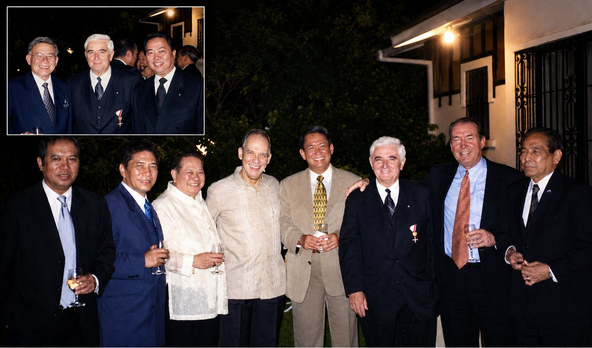
The setting itself seemed symbolic of transition. The calm Austrian lake, the movement of sailboats across open water, and the freedom of summer stood far removed from hospitals, funerals, and memories of wreckage.
What began as companionship gradually evolved into something deeper.
For Günter, Ulrike represented not the erasure of grief, but the possibility that life could still continue after it.
In 1970, she became his second wife.
The widower slowly began learning how to love again.
By the end of his doctoral work, Günter Matschuck had already crossed extraordinary social boundaries.
The wartime child from bombed Cologne had become Dr.-Ing. Günter Matschuck of RWTH Aachen University — a scholar of thermodynamics and combustion systems shaped equally by intellectual rigor, practical labor, grief, resilience, and survival.

Yet even academic achievement did not quiet the restlessness within him. Beyond Germany, a rapidly industrializing world was beginning to open.
The Widower
For a long time after Marika’s death, Günter no longer experienced life as forward movement.
He worked. He studied. He recovered.
But beneath the discipline and intellectual rigor remained a quiet uncertainty about whether the emotional future he once imagined for himself had disappeared forever.
Hermann Hesse’s Stufen stayed close to him during those years:
“The heart must be prepared for departure and new beginnings…”

At first, the words felt impossible to believe. Then, during the summer of 1969 beside the waters of Lake Wörthersee, life began quietly opening once more.
Across Continents and Cultures
Leaving academe for industry meant abandoning the relative predictability of university life for the far more volatile world of international management.
It was another leap into uncertainty. And another reinvention.
For many engineers of his generation, academic life represented stability, prestige, and intellectual security. But Günter had never been entirely comfortable remaining still for too long.
The same curiosity that once drove him to dismantle machines as a child now pushed him toward larger systems — industries, countries, cultures, and emerging economies undergoing rapid transformation.
Professional opportunities soon carried him far beyond Germany. Together with Ulrike, he entered a period of movement across continents that would define the next stage of his life.

Through major industrial assignments with German engineering firms, he worked across Europe, North Africa, Mexico, Saudi Arabia, and Iran, entering a world where engineering no longer existed merely inside laboratories or lecture halls, but at the center of geopolitics, modernization, infrastructure, and industrial ambition.
By the early 1970s, Günter had already crossed extraordinary social boundaries.
From working-class apprentice, he had become Dr.-Ing. Günter Matschuck of RWTH Aachen University.
Yet he remained restless. The world beyond Germany increasingly called to him.
Professional opportunities soon carried him across Europe, North Africa, Mexico, Saudi Arabia, and Iran through major industrial assignments with German engineering firms. For many Germans of his generation, international work still carried an almost romantic sense of possibility.
While postwar Europe rebuilt itself, much of the wider world was rapidly modernizing, creating enormous demand for engineers capable of operating internationally.
German engineers, in particular, carried strong global reputations for precision, reliability, and technical rigor.

But what distinguished Günter was not merely technical competence.
It was adaptability.
The hardships of his early life had prepared him well for unfamiliar environments. War taught him instability. Farm life taught resourcefulness. Factory work taught discipline. University taught analytical rigor.
Together, these experiences created someone capable of functioning calmly under changing conditions.
Iran proved especially transformative.
Working in Tehran during the Shah’s modernization years exposed him to large-scale industrial ambition, geopolitical complexity, and entirely different cultural systems. The country pulsed with contradiction: ancient Persian traditions coexisted with rapid industrial expansion and strong Western influence.
Günter adapted naturally.
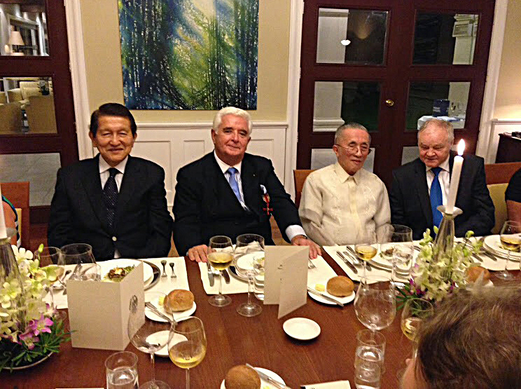
Unlike many expatriates who remained socially isolated, he immersed himself in local environments and quickly realized that international engineering required far more than technical expertise.
It demanded flexibility, observation, and emotional intelligence.
Technical systems alone never determined success. Human systems mattered equally.
He studied how cultures approached authority, negotiation, hierarchy, hospitality, and communication. Rather than resisting differences, he tried to understand their internal logic.
The engineer inside him approached societies much as he approached machines — by searching for underlying systems.
That ability became one of his greatest strengths.
He could move comfortably between workers and executives, engineers and businessmen, Europeans and Asians, technical language and human relationships.

Professionally, the international years transformed him from academic engineer into industrial leader. Largescale projects demanded not only scientific expertise, but also negotiation, crisis management, logistics, leadership, and strategic decision-making. Engineering became inseparable from politics, economics, and culture.
The experiences broadened him profoundly. He no longer thought merely as a German engineer. He increasingly thought globally.
Travel also deepened something already rooted within him: movement itself had become part of his identity. Like earlier generations of his family who migrated toward wider opportunity, Günter continued that journey across continents.
Then, in 1979, he arrived in the Philippines. At first, it seemed simply another assignment in an expanding international career.
Instead, it became home.
The Philippines: His Chosen Homeland
The Philippines transformed Günter’s life more deeply than any country outside Germany.

When he first arrived in Manila in 1979 to help build Maschinen & Technik, Inc. — better known as Matec — he believed the assignment would simply become another chapter in an already international career. By then, he had already worked across Europe, North Africa, the Middle East, and Latin America. Movement had become almost instinctive to him. Countries changed. Projects changed. Industries evolved.
But the Philippines would become something else entirely. It would become home.
At first, Manila felt overwhelming. Germany had shaped him through order, punctuality, precision, and systems.
The Philippines introduced him to a society that often moved according to entirely different rhythms — warmer, more improvisational, emotionally expressive, and capable of remarkable resilience amid uncertainty.
The city assaulted the senses.
The tropical heat, crowded streets, jeepneys, informal markets, sudden downpours, and the striking contrasts between privilege and poverty stood far from the disciplined postwar Germany that had formed him. Many expatriates struggled with these realities, retreating into insulated circles where the country remained merely a temporary assignment.
Günter adapted.

Part of that adaptability came from experience. Having grown up amid war, collapse, and reconstruction, he understood instinctively that societies rarely function perfectly beneath the surface. What mattered was not superficial disorder, but whether people retained the capacity to endure, rebuild, and move forward.
And in the Philippines, he recognized that quality everywhere.
Resilience.
The country reminded him, in unexpected ways, of postwar Germany — imperfect, wounded, improvising, yet deeply alive.
But the deeper transformation came through Joanne.
Their meeting began quietly, without ceremony or dramatic intention, during a period when Günter’s life was still largely defined by work, industrial projects, and the demanding rhythm of international business. Yet Joanne brought something into his life that no engineering system or professional achievement could provide: emotional rootedness. By then, Günter had already passed through earlier chapters of love, loss, remarriage, and international movement that had profoundly shaped him emotionally.
She possessed warmth, steadiness, intelligence, and a deeply Filipino sense of family and care that gradually drew him beyond the insulated world often inhabited by expatriates. Through her, Manila ceased being merely a place of contracts, meetings, and industrial negotiations. He began experiencing the country from within — through family gatherings, friendships, celebrations, everyday routines, and the deeply relational culture that defines Filipino life.

What began as companionship slowly deepened into love.
For Günter, whose earlier years had already been marked by profound personal loss, the relationship brought not only affection, but renewal.
Joanne entered his life during a period when he was no longer simply building a career, but unconsciously searching for permanence.
And in many ways, she became the bridge between the man who had spent decades moving across continents and the man who would finally choose to stay.
Marriage changed geography. The Philippines was no longer an assignment. It became personal. Over time, Günter built not only businesses, but roots.
Through Matec and its growing role in Philippine industrial development, he became deeply involved in energy systems, infrastructure, and German technological partnerships in the country. His background in thermodynamics and combustion engineering naturally drew him toward questions of national development. He understood clearly that industrial growth depended upon reliable energy, longterm planning, and technological modernization.
Without infrastructure, development stalled. Without energy, industries could not grow.

As the Philippines confronted recurring energy shortages and industrial challenges during the 1980s and 1990s, Günter increasingly saw his work not merely as business, but as contribution. Through Matec, he helped introduce German engineering systems and technologies into major Philippine industries, eventually participating in projects that would significantly shape the country’s industrial and energy landscape.
Yet business alone never fully defined his life in Manila. What rooted him more deeply were the relationships.
Over the years, he built lasting friendships across the expatriate, business, diplomatic, and civic communities. The Rotary Club of Manila became especially meaningful to him, not merely as an institution, but as a circle of friendship, service, and shared purpose. There he found men whose influence extended beyond business into nation-building, public service, and civic leadership.
The relationships formed within Rotary would later become especially important during periods of political and economic transition in the Philippines. Through the club, he encountered businessmen, diplomats, military leaders, technocrats, and public officials who were helping shape the country during a transformative period of its history.
But more importantly, he found community.
The same applied to his growing involvement in institutions that strengthened German-Philippine relations. Beyond his leadership within the European Chamber of Commerce of the Philippines and the German Club Manila, he became one of the key figures behind the foundation and development of the German-Philippine Chamber of Commerce and Industry.
What began as informal business forums among German businessmen eventually evolved into a fully recognized AHK within the worldwide German chamber network.

Institution-building appealed naturally to him.
Perhaps because he had witnessed societal collapse during childhood, he understood the importance of durable systems, cooperation, and long-term structures that outlast individual personalities.
He approached organizations much the same way he approached engineering: carefully, systematically, with an eye toward continuity.
At the same time, the Philippines awakened dimensions of his personality that Germany alone had not fully drawn out. Beneath his disciplined exterior existed warmth, humor, sociability, and emotional openness inherited from his Rhineland roots. Filipino culture — with its emphasis on hospitality, family, friendship, and personal connection — resonated deeply with him.
Business meetings became dinners. Professional relationships became lifelong friendships. Communities became extended families.
Even his hobbies became extensions of relationship-building. Golf opened doors to friendships and business networks. Sailing aboard his yacht became a setting for conversations, partnerships, and moments of trust that often mattered more than formal negotiations themselves.
Gradually, the city stopped feeling foreign.

Manila became the place where his professional ambitions, civic commitments, friendships, and family life converged into something larger than career alone.
The Germany of his childhood had shaped his discipline. But the Philippines expanded his humanity.
And by the time life confronted him with its next great turning point in 1986, the country had already ceased being merely the place where he worked.
It had become the place where he belonged.
Leadership Through Service
For Günter, leadership was never measured by titles alone.
He had witnessed too much of history’s failure to believe that authority automatically produced wisdom. As a child, he saw governments collapse, cities burn, and societies descend into destruction despite powerful leaders and elaborate institutions. Those experiences shaped him permanently. They taught him that leadership without responsibility could become catastrophic. Perhaps because of this, he approached leadership differently throughout his life.

To him, leadership was not performance.
It was stewardship.
It meant assuming responsibility when systems became fragile or uncertain.
Every stage of his life reinforced that philosophy. The farm in Baden taught cooperation and discipline. The apprenticeship years taught respect for labor. University taught intellectual rigor. International engineering projects taught adaptability and strategic thinking. The Philippines transformed those lessons into something broader: service.
Over time, he came to see engineering itself as a form of service. Machines, energy systems, and infrastructure existed not merely for technical achievement, but to improve human life.
Reliable electricity allowed hospitals to function. Efficient systems created jobs. Sustainable energy protected future generations.
That practical understanding shaped his later work deeply.

After settling in the Philippines, he did not isolate himself within corporate circles. Instead, he immersed himself in institutions, organizations, and civic life because he believed healthy societies required active participation from competent individuals.
One of the most important arenas for this involvement became the European Chamber of Commerce of the Philippines (ECCP), where he served on the board for nearly two decades.
There, he helped strengthen European-Philippine economic ties while advocating responsible industrial and commercial development. But his involvement did not stop there.
Recognizing the need for a stronger and more structured platform specifically dedicated to German-Philippine economic cooperation, Günter became one of the driving forces behind the creation of the German-Philippine Chamber of Commerce and Industry. What began as regular business forums among German businessmen at the German Club gradually evolved into a fully institutionalized chamber that would eventually achieve official recognition within the global network of German foreign chambers of commerce as an AHK — Auslandshandelskammer.
He served the organization in multiple capacities: founding member, VicePresident, later President, and eventually Honorary Member. Under his leadership and alongside other committed pioneers, the chamber evolved from a locally funded initiative into a respected institution that significantly strengthened bilateral business, investment, and technological cooperation between Germany and the Philippines.
Institution-building appealed naturally to him.
Perhaps because he had witnessed societal collapse during childhood, he understood deeply that stable societies depended not merely on charismatic individuals, but on durable systems capable of outlasting personalities and political cycles.

That memory never left him.
He understood that societies rebuild themselves through education, technical competence, infrastructure, and institutional discipline. At the same time, he recognized how corruption, weak systems, and short-term thinking could cripple development.
This gave his leadership seriousness and practicality. He cared less about appearances than about functioning systems.
The same mindset drew him toward renewable energy advocacy long before sustainability became globally fashionable. As an engineer trained in thermodynamics and combustion systems, he understood the long-term limitations of fossil fuel dependence and recognized the enormous renewable potential of the Philippines.
Rather than simply criticize slow progress, he became actively involved in improving it.
Through organizations such as the Philippine Solar and Storage Energy Alliance and through his participation in discussions surrounding the Renewable Energy Law during the time of Secretaries Angelo Reyes and Raphael Lotilla, he helped promote dialogue among engineers, investors, policymakers, and business leaders, contributing to the early growth of renewable energy initiatives in the country. Under his guidance, Matec itself gradually reoriented toward renewable energy systems, solar technology, and EPC capacity-building.
Once again, his leadership reflected practicality rather than ideology. He believed environmental responsibility and industrial development did not need to conflict. Good engineering, he argued, should pursue efficiency, sustainability, and long-term viability together.

This adaptability distinguished him. Though trained during the industrial age, he remained intellectually flexible enough to embrace future-oriented energy solutions rather than cling rigidly to old systems.
He understood that survival — whether for individuals, companies, or societies — required the willingness to evolve.
His civic involvement extended beyond business and energy. Organizations such as the German Club Manila became important to him because they fostered continuity, friendship, and mutual support for expatriates living far from home.
When he later served as president of the German Club Manila, he approached the role with characteristic seriousness and warmth. He believed organizations should not merely preserve tradition, but strengthen genuine human relationships.
People who knew him often noticed the unusual combination of discipline and sociability he carried. He could be demanding regarding competence and preparation, yet personally warm, humorous, and generous in conversation.
That duality reflected his roots: from his father came structure and technical rigor; from his mother came warmth and emotional openness. The Philippines allowed both sides of his personality to flourish.
His involvement with the Rotary Club of Manila reflected the same philosophy of leadership through service. Rotary’s emphasis on ethical responsibility, international friendship, practical action, and civic engagement resonated naturally with his values. Within Rotary, he found not merely networking opportunities, but a genuine community of individuals committed to nationbuilding, humanitarian work, and professional integrity.

The friendships he formed through Rotary became deeply woven into his Philippine life. During periods of political instability — including the coup attempts of the late 1980s — he helped coordinate evacuation and safety assistance for fellow expatriates and German nationals. Some people retreat during uncertainty.
Others step forward. Günter belonged to the latter.
Perhaps because he had already survived catastrophe during childhood, crises did not paralyze him emotionally. He approached emergencies operationally: assess the situation, organize systems, help people, remain calm.
What mattered to him was never prestige. It was usefulness.
Because he himself had risen from apprenticeship and factory life, he never lost respect for workers, technicians, and practical labor. He understood exhaustion, struggle, and the difficulty of social mobility.
As a result, he moved comfortably across social boundaries — equally at ease with executives and diplomats as with mechanics and laborers.
Many successful professionals lose that ability over time. Günter never entirely did.

Over time, his contributions to German-Philippine relations, civic life, business development, renewable energy advocacy, and international cooperation earned him prestigious honors from both Germany and Austria, including the Federal Cross of Merit.
Yet those who knew him closely understood that awards mattered far less to him than continued usefulness.
Even after decades of achievement, he remained intellectually curious and deeply engaged with ideas, systems, and community life. The boy who once dismantled mechanical toys to understand how they worked never disappeared completely.
He simply expanded his field of interest from machines to societies themselves. And perhaps that is the thread connecting every stage of his life.
Whether studying combustion systems, managing industrial projects, building institutions, advocating renewable energy, strengthening GermanPhilippine relations, or serving communities through Rotary and civic organizations, Günter Matschuck approached leadership through a single enduring principle:
Build systems that help people endure, adapt, and move forward.
Because shaped by war, reconstruction, migration, and survival, he understood something many leaders never fully learn:

The true purpose of leadership is not power. It is continuity. It is helping people rebuild, again and again, whenever history demands it.
The Accident That Changed Everything
By 1986, Günter Matschuck had already survived enough upheaval for several lifetimes.
He had endured war, displacement, hunger, grief, industrial hardship, migration across continents, and the relentless demands of building businesses and institutions far from Germany.
Through discipline and adaptability, he had repeatedly rebuilt himself whenever life demanded reinvention.
Yet nothing in his earlier years fully prepared him for what happened on May 14, 1986.
It was a quiet Sunday afternoon in Dasmariñas Village. Friends were expected later that day.

Among them were Dr. Cris Garcia and his wife Becky, part of the close circle of companions who had become deeply woven into Günter’s life in Manila. Inside the house, preparations for dinner were already underway.
Outside, a large mango tree stood heavy with fruit.
With an upcoming trip to Salzburg approaching — and Europe still anxious over contamination fears following the Chernobyl disaster — Günter decided to harvest several ripe carabao mangoes to bring along.
It was an ordinary decision. The kind that changes lives precisely because it appears so ordinary.
Using a lightweight aluminum skimmer pole normally intended for cleaning the swimming pool, he climbed high into the mango tree, maneuvering carefully through the branches in search of the best fruit.
The upper canopy concealed something he could not see: a high-voltage transmission line running above the tree.
As he stretched toward one final cluster of mangoes, the aluminum pole touched the live wire.

The electrical surge exploded through his body instantly.
The current locked his muscles so violently that he could not release the pole. Electricity coursed through him with catastrophic force, entering through his upper body and eventually exiting through his right foot. Later, he would describe the experience in strangely vivid fragments — flashes of color, suspended time, and the surreal sensation that his entire life was unfolding before him in seconds.
But above all, he remembered one overwhelming realization: he did not want to die. Not yet.
He later reflected that in those brief moments between consciousness and oblivion, thoughts of Joanne, family, unfinished work, friendships, and the life he had built in the Philippines surged through him with extraordinary clarity.
Then came the fall.
Several fortunate circumstances likely saved his life. The rubber soles of his shoes reduced grounding, preventing the current from instantly killing him. Even so, the injuries were catastrophic.
When Joanne reached him moments later, smoke still rose faintly from his burned body.

Despite the immense trauma, Günter briefly regained consciousness.
“I am alive,” he reportedly managed to say. “Makati Medical… please inform Dr. Varwig.”
Still in her bathing suit, Joanne helped rush him into the car together with members of the household. There was no time to wait for an ambulance.
At Makati Medical Center, doctors were astonished that he had survived.
The burns were severe. Tissue damage spread across multiple parts of his body. His left hand and right foot had sustained especially devastating injuries from the electrical current. The possibility of losing both appeared very real.
Back at the house, meanwhile, Dr. Cris Garcia and Becky had already arrived for their scheduled visit. In the era before mobile phones, they only learned of the accident upon reaching the residence.
Dr. Garcia immediately rushed to the hospital.

Although not formally accredited at Makati Medical Center, Dr. Heinz Varwig — one of the most respected physicians within Manila’s expatriate community and specially authorized to practice in the Philippines — strongly urged the hospital administration to allow Dr. Garcia to assist in the treatment.
What followed became an extraordinary medical struggle.
The electrocution had critically compromised circulation to Günter’s left hand. Doctors feared massive tissue death and possible amputation. Infection presented constant danger.
Dr. Garcia proposed an innovative reconstructive approach rarely attempted locally at the time.
To restore circulation and preserve the injured hand, surgeons temporarily attached it to Günter’s lower abdominal area, allowing blood vessels from the abdomen to nourish the damaged tissues while reconstruction proceeded. For five weeks, his hand remained attached in this manner while surgeons painstakingly repaired tendons, nerves, and damaged tissue.
The procedure later drew admiration even from specialists in Munich.
Months of recovery followed.

There were multiple operations. Skin grafts. Painful rehabilitation. Long periods of immobility and uncertainty.
Eventually, three toes had to be amputated because of the injuries sustained by his right foot.
But both legs were saved.
For the second time in his life, Günter found himself confronting mortality after an ordinary day suddenly turned catastrophic.
The emotional toll proved equally immense. For a man whose identity had long been tied to movement, work, independence, and competence, the sudden vulnerability was deeply unsettling. Daily routines had to be relearned. Simple movements became exhausting. Even signing documents became temporarily impossible, requiring a notary public to visit the hospital because he could not hold a pen.
And yet, remarkably, his sense of humor survived.
Among the many visitors who came to Makati Medical Center were members of the Rotary Club of Manila Sunshine Committee and several close friends from Meralco.

Attempting to lighten the atmosphere, his Meralco friends jokingly told him they had actually come “to sue him for an illegal connection.”
The room erupted in laughter.
For Günter, humor became part of survival itself.
Eventually, he traveled to Munich for further specialized treatment before returning once more to Manila.
But by then, something deeper had changed.
The accident forced him into direct confrontation with mortality. For the first time in many years, life no longer felt indefinitely expandable. Survival itself began to feel like responsibility.
And slowly, almost quietly, the event transformed his relationship with the Philippines.

Before the accident, the country had still remained — at least partially — within the framework of career and assignment. He had built businesses, friendships, and institutions there, but some part of him still belonged to the transient rhythm of international life.
The electrocution changed that. Surviving the accident clarified where he truly belonged.
At precisely the same moment, the Philippines itself was undergoing historic transformation following the People Power Revolution. A new political and economic landscape was emerging, and many of the friendships Günter had cultivated through business, Rotary, and civic life would become deeply connected to that unfolding national story.
At the same time: Matec’s shareholders offered him partnership and co-ownership. The business he had spent years building had matured.
And Joanne had become inseparable from his emotional future.
The accident no longer appeared to him merely as catastrophe.
It became transition.
Years later, Günter would refer to May 14, 1986 as his “second birthday.”
Not because the suffering was small. Not because the trauma disappeared. But because survival had given him another beginning.
Again, life had dismantled the world around him. And once again, he chose to rebuild.
The Philosophy of a Life in Stages
In the later years of his life, especially after the electrocution accident of 1986, Günter Matschuck increasingly came to view life not as a straight and orderly progression, but as a succession of stages through which human beings are repeatedly forced to pass.
Again and again, life dismantled the world he knew. Again and again, he was compelled to begin anew. It was perhaps for this reason that Hermann Hesse’s poem Stufen resonated so deeply with him. The poem speaks of life as a sequence of rooms, each one temporary, each one eventually requiring departure. Every stage demands the courage to leave behind what once felt permanent in order to move toward something unknown.
Few ideas captured Günter’s life more completely.
War had taught him that entire societies could collapse overnight. Grief taught him that even carefully imagined futures could disappear without warning. The death of Marika in 1966 became the first great fracture of his adult life. For a time, he believed no future could emerge from such devastation. Yet years later, meeting Ulrike beside the waters of Lake Wörthersee quietly revealed another truth embedded within Hesse’s Stufen: that life demands not only endurance, but the courage to form new bonds after loss.
Migration taught him adaptability. The Philippines taught him rootedness and belonging. And survival itself — especially after the accident of 1986 — taught him that catastrophe could also become transition.
Over time, he stopped viewing reinvention as interruption.
It became part of life itself.
The frightened wartime child became a mechanic. The mechanic became a scholar. The scholar became an international executive. The expatriate eventually became a man deeply rooted in the Philippines.
In one of those identities erased the previous one. Each simply became another stage in an unfinished journey.
Perhaps this understanding ultimately freed him from the illusion of permanence. Nations changed. Industries evolved. Technologies advanced. Human bodies weakened. Even success itself proved temporary.
What endured was not stability, but the capacity to adapt without losing one’s humanity.
That, more than professional achievement, may have been the defining wisdom of Günter Matschuck’s life.
Every stage eventually ends.
Yet within each ending remains the possibility of another beginning. And again and again throughout his life, he chose to begin anew.
Epilogue: The Courage to Begin Again
In the end, perhaps the most remarkable thing about Günter Matschuck was not simply that he survived so many upheavals.
It was that, after a lifetime of movement, he finally chose to stay.
The boy born into the collapse of wartime Germany could easily have remained a permanent traveler — another international engineer moving endlessly from country to country, project to project, never truly belonging anywhere. Much of his early life seemed to prepare him for precisely that kind of existence.
Yet somewhere along the way, the Philippines ceased being merely one destination among many.
It became home.
Not because the country was easy.
Not because life there was orderly or predictable. But because beneath its imperfections, he recognized something deeply familiar:
Resilience.
He saw it in the warmth of friendships, in the improvisation of daily life, in the endurance of institutions struggling to grow, and in the capacity of people to rebuild after hardship — qualities he himself had carried since childhood.
Over the decades, his life became inseparable from the country that had adopted him. His work helped shape industries and energy systems. His leadership strengthened institutions and German-Philippine relations.
His friendships extended across business, civic life, Rotary, and the expatriate community. Through Joanne, he built not merely a household, but a sense of permanence after decades of motion.
And perhaps that became his final reinvention: not the engineer, not the executive, not even the survivor — but the man who finally found where he belonged.
Over the years, his relationship with the Philippines deepened far beyond business or civic involvement alone. In Tablas, Romblon — a place that became one of his personal sanctuaries later in life — he eventually built the St. Hubertus Chapel in Villa M, inaugurated on his 70th birthday.
Overlooking the sea, the small chapel stood as a quiet expression of gratitude after a life marked by war, loss, survival, reinvention, and unexpected grace. Appropriately for an engineer who had spent decades advocating systems, energy, and sustainability, the chapel itself was solar-powered — a subtle fusion of faith, technology, and stewardship.
But more than architecture, the chapel reflected something deeply personal.
For all his industrial accomplishments and international success, Günter never viewed life purely through material achievement. Beneath the disciplined exterior remained a man profoundly aware of fragility, providence, and the mysterious ways life had repeatedly granted him another beginning.
The St. Hubertus Chapel became, in many ways, the quietest and perhaps most intimate expression of that understanding: a sanctuary of faith, gratitude, and reflection overlooking the waters of the country he had ultimately chosen as home.
Today, the legacy of Dr. Günter Matschuck lives not only in projects completed, organizations strengthened, or technologies introduced. It lives in the people whose lives he touched, the institutions he helped build, and the quiet example he set for others: that resilience need not harden a person; that discipline can coexist with warmth; nd that even after profound loss, life still permits renewal.
Some lives are remembered for success.
Others for endurance.
A rare few are remembered for the lives they helped strengthen around them.
Dr. Günter Gerhard Matschuck belonged to the latter.

 Dr. GLENN BANAGUAS
 Diplomacy, Duty, and the Moral Compass of Nations: Rotary Club of Manila Welcomes Former Consul General Atty. Voltaire D. Mauricio at the 29th Weekly Membership Meeting
 Final Report: Rotary Global Grant GG2572214 (Cleft Lip/Palate Surgery for Marginalized Children/Youth)